


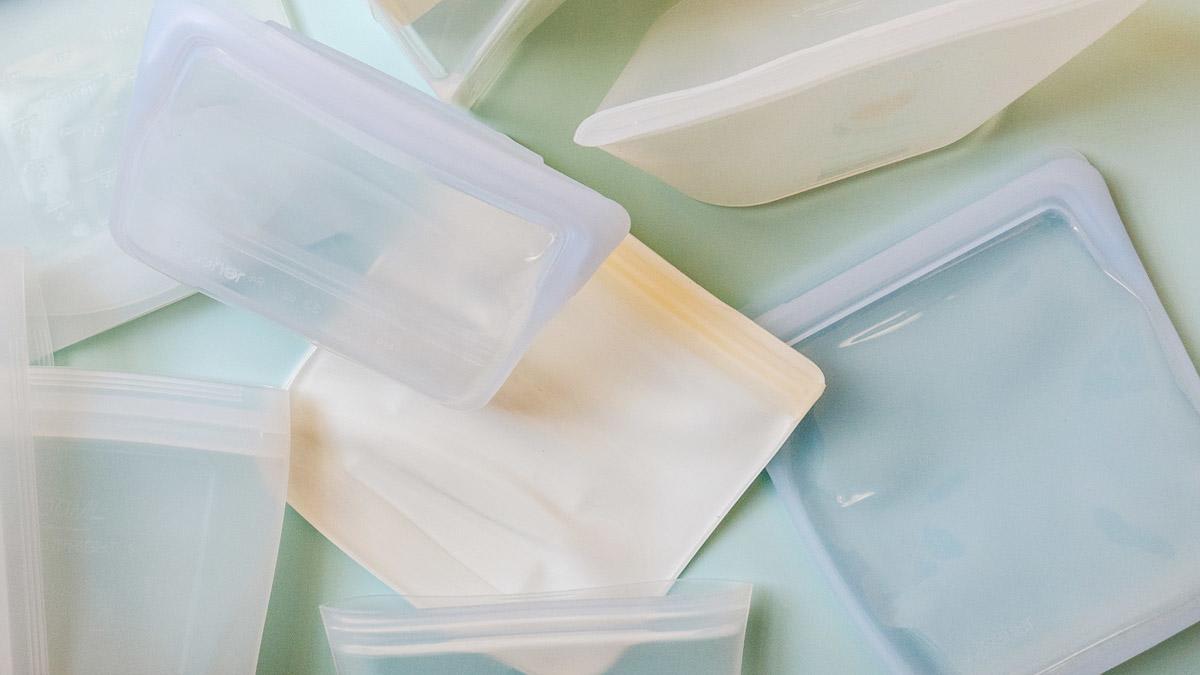
Quart Bag (40 fluid ounces)
Price paid: $19.99
Where to buy: Stasher
Stand-Up Mini Bag (28 fluid ounces)
Price paid: $17.99
Where to buy: Stasher, Amazon, Crate and Barrel
It seems like you can’t stroll through a store these days without stumbling into a Stasher. These tastefully tinted bags are everywhere, from Amazon and Whole Foods to Target and possibly your neighborhood co-op. The bags come in 10 sizes, ranging from pocket (4 fluid ounces) to stand-up mega (128 fluid ounces). The weight of the bag is printed on it, so grocers can charge you for purchases without including the weight of the bag. Stasher bags are made from platinum silicone. Yep, I wondered what the heck platinum silicone was, too, so I looked into it.
Silicone products need to go through a curing process that uses either platinum or peroxide as the catalyst. Curing with peroxide is cost-effective but requires fillers that add contaminants and byproducts to the final product (that do not affect its safety for food storage). Platinum curing is more expensive but produces purer silicone with no fillers that is stronger and more durable as a result. All medical-grade silicone is platinum silicone, but that’s not necessarily the case with food-grade silicone.
So how did this popular silicone bag fare on my assessment? Let’s start with the good. Stasher’s thick silicone and airtight seal make these bags best for protecting frozen goods from freezer burn. It was easy to press out excess air from the bag, and it stayed that way after a couple of days in the freezer. There was some frost clinging to the bag’s insides and the mango, but not as much as with the other bags. That tight seal is also leakproof, so you can feel secure filling it with marinades. It stayed shut even with a 5-pound weight on the bag. It also stayed shut when dropped flat from a height of 3 feet, but it opened when dropped on its side.
Filling the flat and stand-up bags requires two hands, one to splay the opening open and the other to fill. With the stand-up version, you can at least let go of the bag without it flopping over, but filling the flat bag with liquid is much trickier. And because the silicone is thick and tends to revert to its closed position, it is a little frustrating when you need to access the bag repeatedly, like when snacking, for instance. It requires a bit of cramming if using only one hand.
I was able to displace most of the air in the bag for sous vide, but the puffy shape of the thick bag and seal did not make it easy. The bag also didn’t stay submerged in the water bath—it floats—so I had to place a ramekin on it to keep the chop below the waterline. Compared with a pork chop sous vide in a Ziploc bag, the Stasher chop was slightly dry and lacking flavor, but after cleaning the bag in the dishwasher, it retained no smell from the fish sauce marinade.
Like all the bags I evaluated, the Stasher was no match for Bolognese sauce when it came to stains. After a wash in the dishwasher, the bag came out orange. Stasher’s website suggests setting stained bags in the sun for one or two days to remove stains. So I tried it out, and the stained Stasher looked as good as new after two days in the sun.
The Stasher bags were easy to hand-wash, thanks to the rounded corners, but there are many ridges in the seal that harbor food, which can be a tough task for a sponge to tackle. I had to use a brush to clean out the seal thoroughly. The bags take over three tines to stay propped open in the dishwasher, but they stand up well and don’t flop over. The openings are narrow, so you also need to prop them open to dry thoroughly. They took longer than most other bags to dry. It was easy to microwave sauce in the stand-up bag, and because the opening is just a slit, it kept my microwave splatter-free.
There aren’t many bad things to say about Stasher bags, but there are some notable problems regarding ease of use, especially for people with limited hand mobility. It’s easy not to seal the bag completely shut and not know it. Gliding your fingers along the seal like you would a Ziploc doesn’t lock it, but it appears sealed. You need to pinch the seal to lock it. The seal is also more difficult to open than most others.