





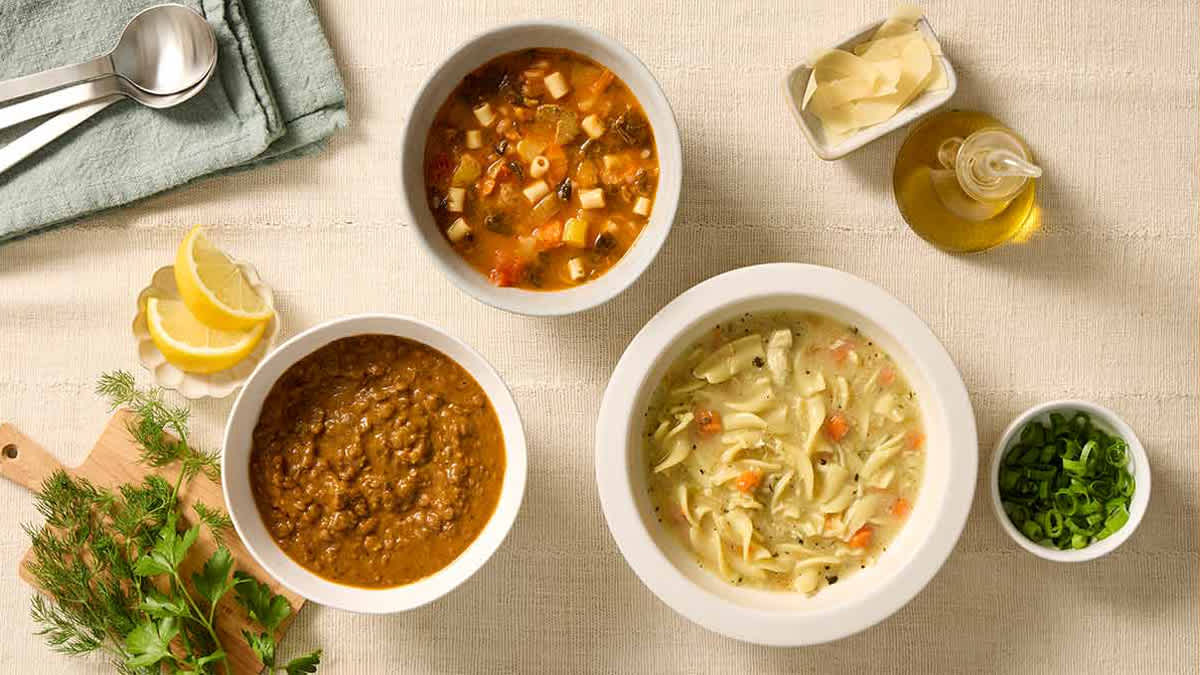
In general, chicken noodle, minestrone, and lentil soups can be good for you, although the sodium content may be a concern (more on that later). The soups in our tests were fairly low in calories (about 100 to 200 per cup) and saturated fat (about 1 to 4 grams per cup); saturated fat is linked to heart disease.
Just keep your eye on serving size: It’s pretty easy to eat the entire can or container, says Angela Odoms-Young, PhD, an associate professor and nutrition researcher at Cornell University. If you do, you’ll need to multiply the amount of sodium and other nutrients.
You may wonder about the quality of prepackaged soups. We found that most were made with whole-food ingredients and contained few, if any, additives. Almost half had no gums, modified food starch (a thickener), emulsifiers, or so-called “natural” flavors (which may be extracted in a lab using synthetic solvents). Several others had just one or two additives. “While these additives are not necessarily harmful, it’s not hard to find packaged soups with fewer or none,” Keating says.
Soups typically aren’t protein powerhouses, but they can contribute a decent amount. “Even though most people get enough protein in their diets without really trying, protein does help you feel full, so it’s good to have some at every meal and snack,” Keating says. Close to half the soups we tested had 7 to 9 grams of protein per cup, about what’s in a large egg. Just be mindful of protein claims. For instance, Healthy Choice Chicken Noodle boasts 13 grams of protein on the label. But look closely at the smaller type and you’ll see that’s for the whole can, not a single serving.
Soup can also give you a respectable fiber fix, especially when it contains legumes. Fiber promotes satiety, keeps your digestive system running smoothly, and may help lower cholesterol. The recommended daily value for fiber is 28 grams. About half of the minestrone and almost all the lentil soups we tested offer at least 4 grams in a single cup.
Chicken soup gets a lot of buzz as a cold and flu remedy. A study in the journal Chest found that chicken and vegetable soup had anti-inflammatory effects in a lab setting, and reducing inflammation may help control some symptoms. But any soup is hydrating, which is important when you’re ill, and the hot liquid and steam may be useful in thinning mucus and opening up swollen airways. Plus, vegetable-based soups can deliver nutrients that support a healthy immune system. For instance, carrots, spinach, and winter squash are rich in vitamin A, while broccoli, potatoes, and tomatoes contain vitamin C.