





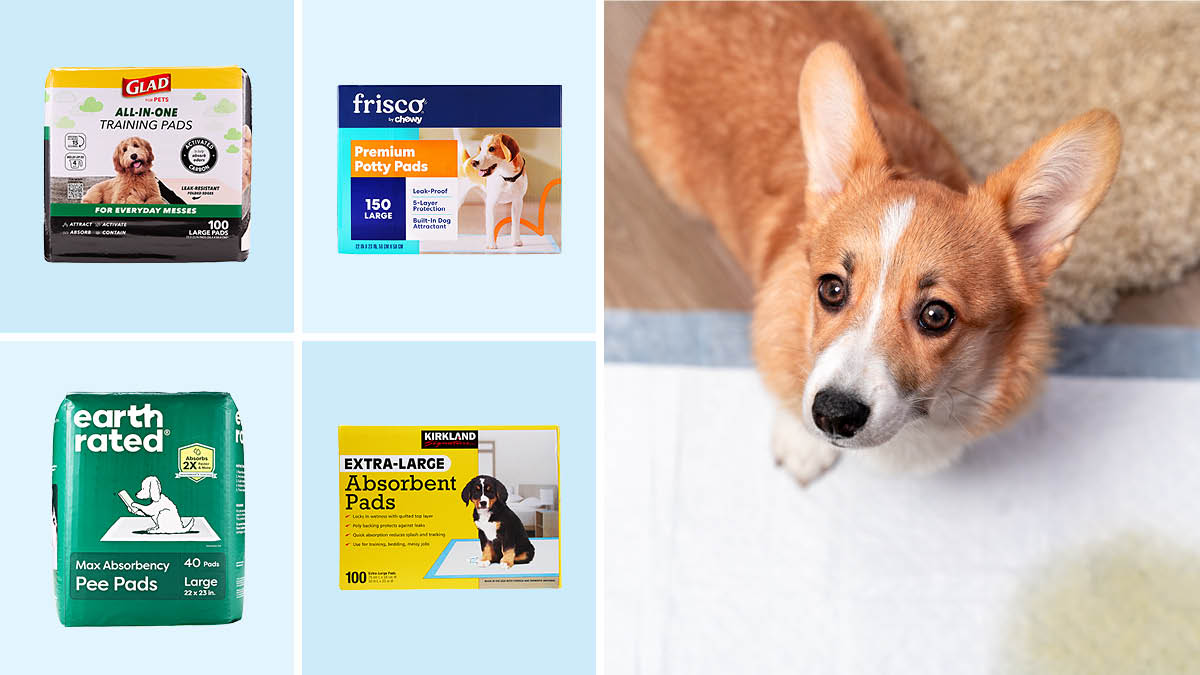
Potty training a puppy is not for the faint of heart—especially if you live in a cold climate and are introducing them to the concept of going outside in the snow, rain, or biting cold. There are times when puppy pads are a lifesaver. If you live in a high-rise apartment, are away for most of the day and can’t let your puppy out, or if your dog is older, sick, or has a mobility issue, puppy pads can really come in handy. They’re also great for lining your pup’s crate.
“Puppies can generally hold their bladder for the number of months they are old plus one. So, that means a 2-month-old puppy can be expected to need to pee every 2 to 3 hours,” Chyrle Bonk, veterinary consultant at Embrace Pet Insurance, tells CR. “Using puppy pads for some of these times can really cut down on your trips outside. With that said, the amount of time you should use puppy pads will really depend on your puppy and your situation. If you have quick access to the outdoors, you may not even need puppy pads or only need them occasionally, such as at night for a few weeks at a time. If you don’t have quick access to the outside, you may need to use them until your puppy is closer to 4-6 months of age, when they don’t need to potty as frequently.”
Puppy pads look so similar that we wondered whether there would truly be differences in how much liquid they can absorb, or even their tear resistance (since puppies are known for playing with everything in sight). CR’s José Amézquita put 10 popular puppy pad brands to the test in our labs and found a significant difference in absorption, although no signs of leakage were observed on any of the pads after pouring two cups of warm water in the center and allowing them to dry overnight.