





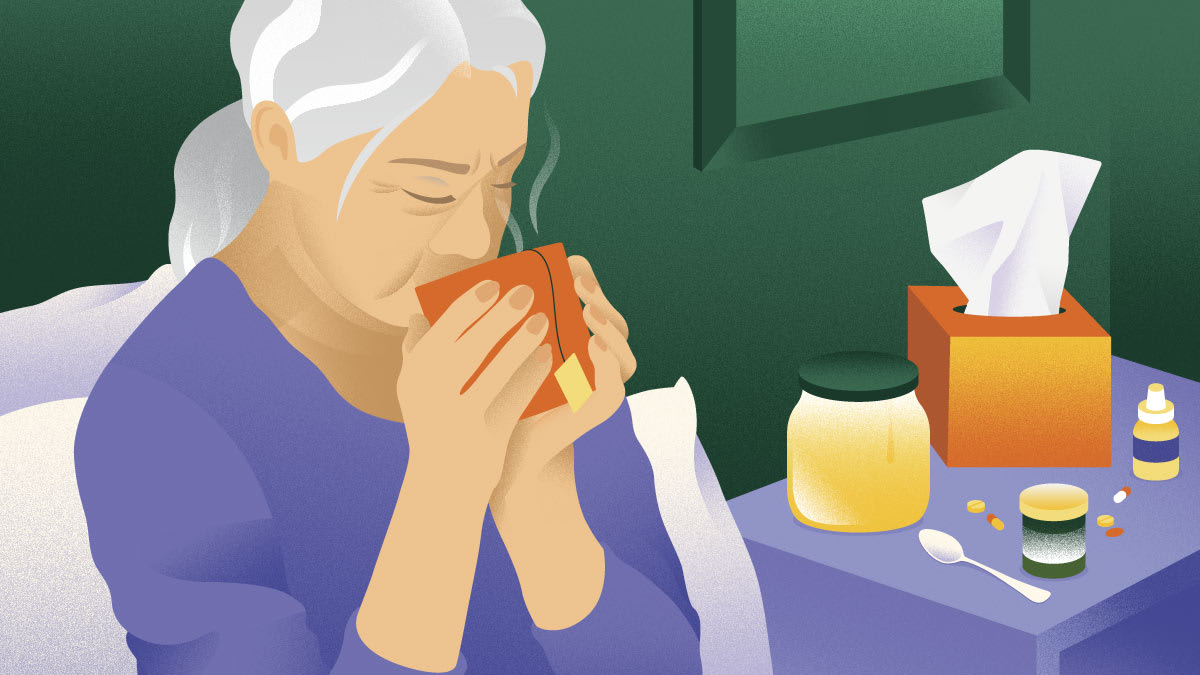
Not all OTC remedies work well or are safe for older adults or for long-term use. And while it may be tempting to reach for dietary supplements to soothe symptoms, there’s no good data to support their use, says Richard Martinello, MD, an infectious disease specialist at the Yale School of Medicine in New Haven, Conn. Here are the OTC treatments that may help you feel better, and how to use them properly.
Pain relievers: Acetaminophen (Tylenol and generic) and nonsteroidal anti-inflammatory drugs (NSAIDs) such as ibuprofen (Advil and generic) and naproxen (Aleve and generic) can help ease a fever, headaches, and body aches. If you have an underlying condition like heart or kidney disease, check with your doctor before taking NSAIDs.
Nasal decongestants: A decongestant that contains the ingredient oxymetazoline (Afrin and generic) might help clear away nasal stuffiness but should be used for no more than three days, Martinello says. Otherwise, it can cause rebound congestion.
Expectorants: Guaifenesin, found in Robitussin and Mucinex, thins mucus so that it’s easier for the lungs to expel it. But expectorants with the cough medication dextromethorphan and the antihistamine diphenhydramine “can cause dizziness, problems with balance, drowsiness, and confusion in older adults,” Vaughan says. Also steer clear of products with pseudoephedrine and phenylephrine, which can affect heart rate and blood pressure.