




That said, going heavy on the wrong kind of carbs can backfire. Many adults complain of low blood sugar, but it can be a self-imposed condition. When you eat too much sugar or refined flour, your blood sugar (glucose) levels spike and then drop quickly. That can make you feel tired or shaky. Stick with fiber-rich foods, and pair them with some fat and/or protein. For instance, eat a pear with a slice of cheese; chicken, sweet potatoes, and a green vegetable; a bean soup; or a piece of whole-grain toast with nut butter. These take longer for your body to digest, resulting in more even blood sugar and energy levels.
Have breakfast. The longest time most of us go without eating is overnight. While you snooze, your body taps into its carbohydrate stores to keep basic functions—like heartbeat, muscle repair, and brain activity—humming. If you skip the a.m. meal, you could be playing energy catch-up all day. Try to eat breakfast within 2 hours of waking up to replenish your carbs, Kreutzer says.
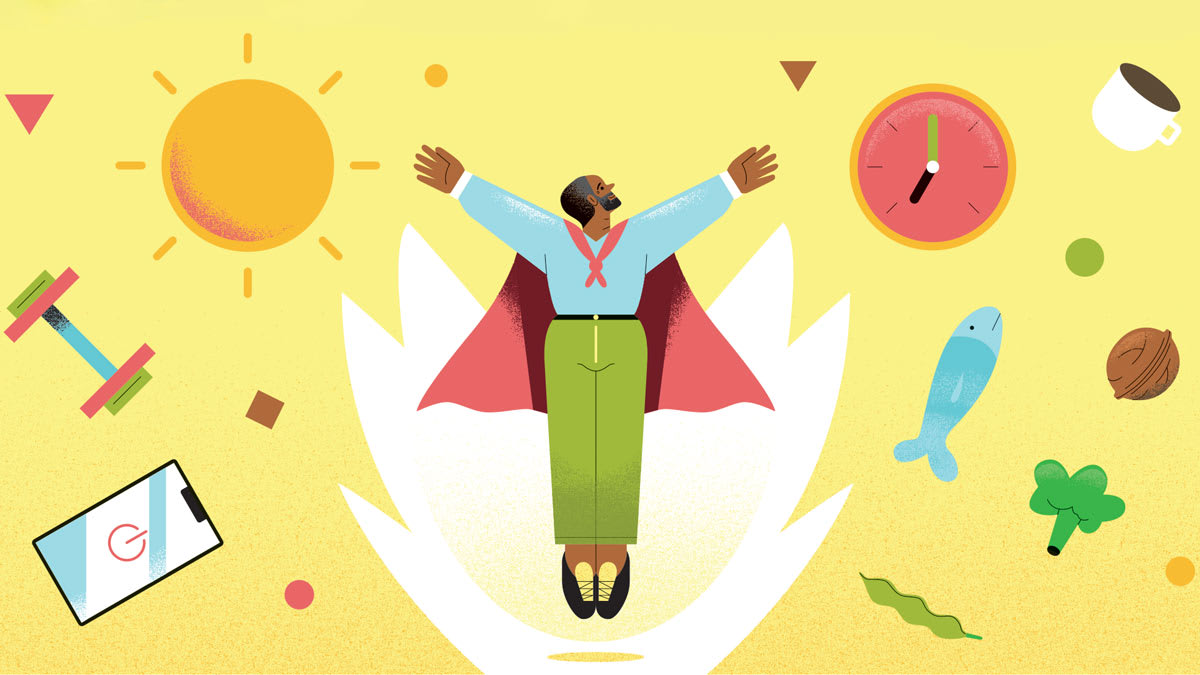
Move toward a Mediterranean diet. In a study published in 2022 in the Journal of Nutrition in Gerontology and Geriatrics, the more closely postmenopausal women stuck to that diet, the less likely they were to feel fatigued. This means eating mostly whole foods, lots of plants, and small amounts of fish and lean meat. Even little swaps, like having fish in place of red or processed meat, increased energy. That may be because of the Mediterranean diet’s anti-inflammatory effects, says Uma Naidoo, MD, director of nutritional and metabolic psychiatry at Massachusetts General Hospital.
By contrast, eating a lot of ultraprocessed food can lead to chronic inflammation, which can make you feel run-down. With chronic inflammation, “our brain tells our nervous system to slow down the body because it thinks we need to rest and fight off illness,” Naidoo says.