


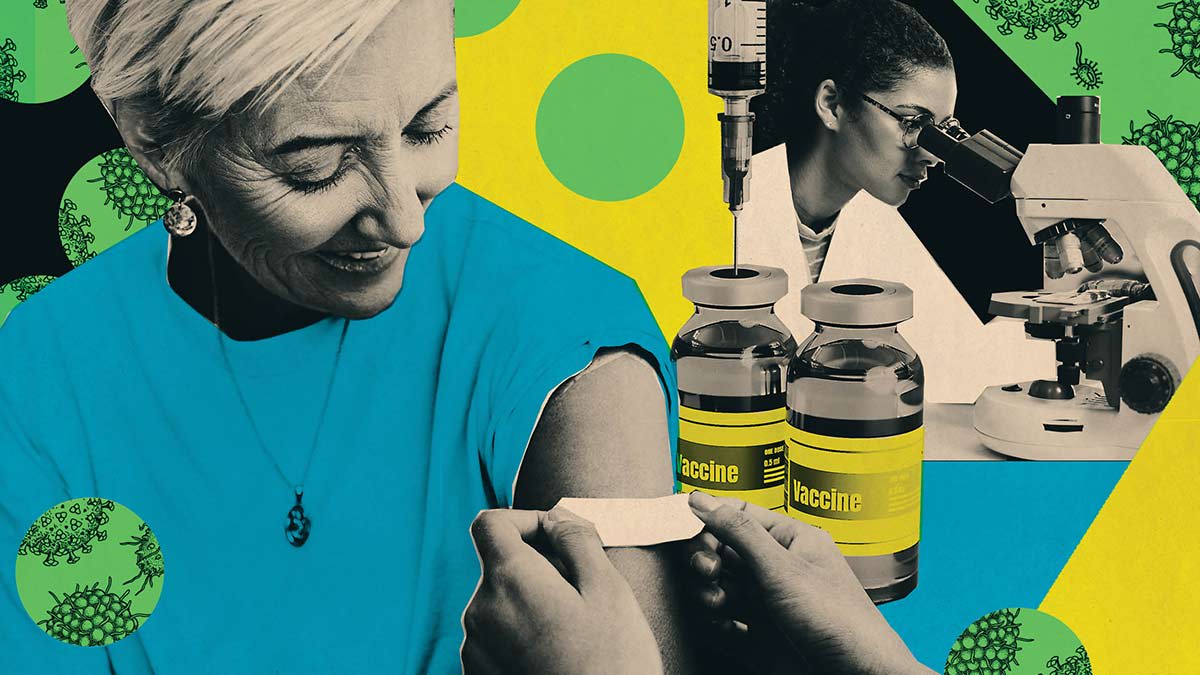
Varicella-zoster, the virus responsible for chickenpox, may lie dormant and reactivate later in life, causing shingles. This can bring a painful, blistering rash and lead to chronic nerve pain, pneumonia, temporary or permanent vision loss, hearing problems, and brain inflammation.
Is it effective? The two-dose vaccine prevents shingles in 97 percent of people ages 50 to 69, and 91 percent of those 70 and older. It’s 91 percent effective in preventing the complication of chronic nerve pain in people ages 50 and up, and 89 percent in those 70 and older. It’s also helpful for people with weakened immune systems. “The vaccine has become a real game-changer for my immunocompromised patients,” says Camille Nelson Kotton, MD, an infectious disease specialist at Massachusetts General Hospital in Boston. “I’ve seen a dramatic drop in cases and complications.”
Who needs it: Groups like the CDC and the ACP recommend that everyone 50 and older get the two-dose Shingrix vaccine, even if they already had shingles or received Zostavax, the older shingles vaccine. Adults younger than 50 should have the vaccine if they are immunocompromised (such as people with cancer).
Who should skip it: Anyone who had an allergic reaction to the first shot (there are two) or is allergic to components of the vaccine.
Cost: Free with insurance and up to $215 without. You can get the two doses, generally spaced two to six months apart, at a pharmacy or in doctors’ offices.
Must-know info: The shingles vaccine may reduce the risk of dementia by about 20 percent, according to a 2025 study published in the journal Nature. “We think it probably prevents the brain inflammation caused by a shingles infection,” Kotton says.