


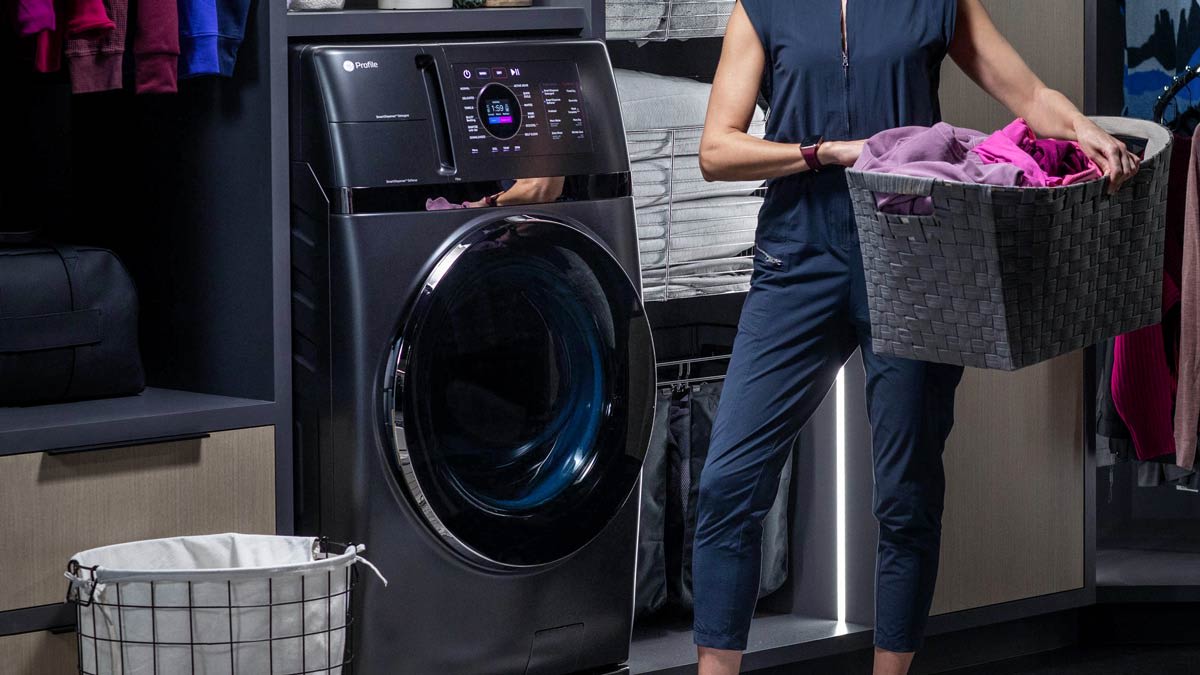
They can be pricey. All-in-one washer-dryers can cost $2,000 or more. The good news is that prices are leveling off. GE’s combo washer-dryer launched at nearly $2,900; now its GE Profile line offers two all-in-one models priced between $1,700 and $2,000. But sometimes these machines can be less expensive than buying a washer and dryer separately. For example, the Whirlpool washer-dryer we tested costs about the same as a Whirlpool front-loader in our ratings.
Drying times are long. As noted above, it can take hours to dry a load of clothes in a combo machine. “It took over 3 hours to dry a 12-pound load in the combo we recently tested, and over 2 hours for an 8-pound load,” Ciufo says. (CR’s drying performance scores combine test results from a 12-pound load of mostly cotton jeans and towels, an 8-pound load of mixed synthetics, and a 3-pound load of delicates.)
Drying times can vary greatly among heat pump and condenser dryers. The models CR tested run on 110 volts compared with the 220-volt power required of most conventional electric dryers. Less voltage means less power can be supplied for heat, which can prolong drying times.
Drum capacities are limited. All-in-one drum sizes (4.5 cubic feet to 5.3 cubic feet) are more typical of washing machines than large-capacity dryers. By comparison, the drum capacity of traditional gas and electric dryers ranges from 7 to 9 cubic feet. That means there’s less room for air to circulate, extending drying times, especially with large loads. That factor contributes to the low drying performance score in our ratings. So while large-capacity all-in-one washer-dryers (capable of accommodating at least 4.5 cubic feet) can handle large, bulky items like comforters, drying them in roughly half the space of a traditional dryer becomes challenging.
You can’t wash and dry at the same time. All-in-one machines don’t allow you to multitask by washing your next load while another load dries. So doing four loads in a day can take 8 to 10 hours. And the dual functionality can be impractical if you wash a lot of delicate items that you don’t want to put in a dryer. If so, you’ll have to program the washer-dryer functions independently.
Repairs may be costly. When a washer and a dryer (or in this case, a washer-dryer combo) have this many moving parts, repairs can get pricey. So it’s important to maintain your all-in-one combo to keep it running efficiently. Neglect can lead to even longer drying times, premature mechanical failures, and a shorter lifespan. That means cleaning the filter after each load and periodically rinsing it under hot water, routinely cleaning the auto dispensers of detergent and fabric softener residue, inspecting and wiping down the rubber drum gasket, and using the self-clean cycle once a month. Refer to your owner’s manual to extend the life of your machine so that your laundry life remains hassle-free. After all, that’s the biggest reason for buying a washer-dryer combo.