


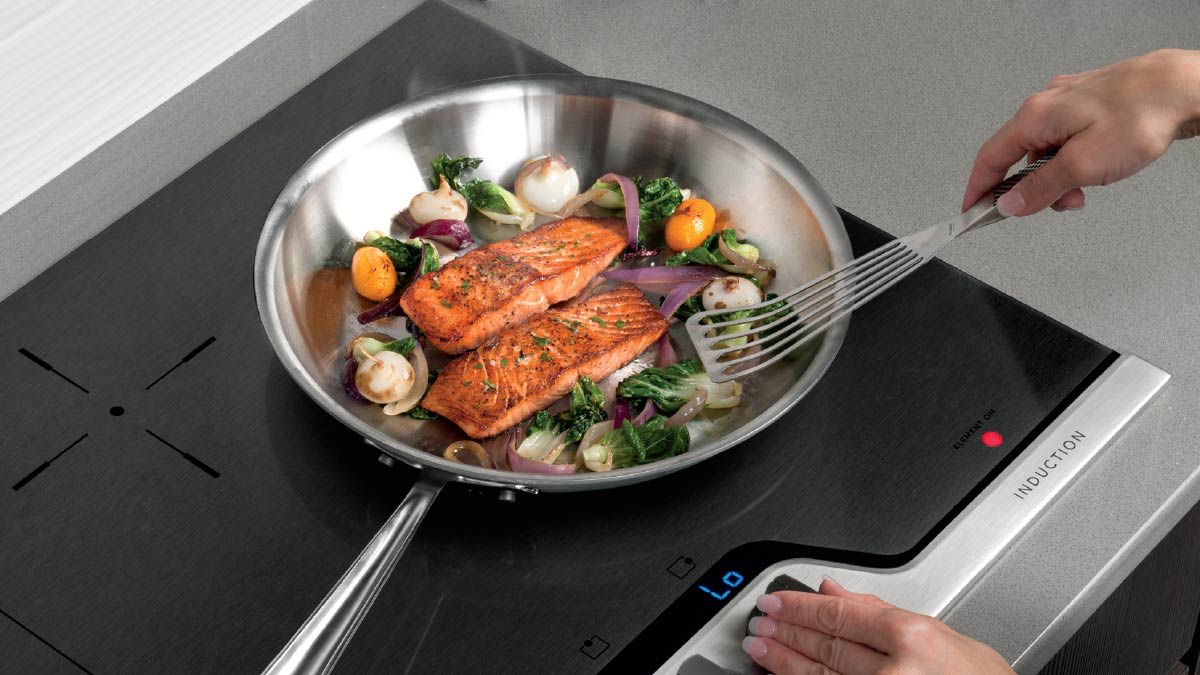
The keyword here is magnetic. You can use a magnet to check whether cookware is induction-compatible. If the magnet is strongly attracted to the pot or pan, you’re good to go. It could be that almost all your existing pots and pans are induction-compatible, except for a few nonstick aluminum pieces. If you plan to shop for new cookware in person, you can take a magnet to the store with you to test pieces. Wherever you plan to shop, check CR’s cookware ratings and model pages, where we note whether the cookware we’ve tested is induction-compatible.
All the cast-iron Dutch ovens, cast-iron and carbon steel frying pans, and stainless steel cookware sets and frying pans we test can be used with induction cooktops. All-copper frying pans usually cannot; aluminum nonstick cookware sets and frying pans may or may not be induction-compatible, depending on their composition.
“Magnetic stainless steel, cast iron, and pretty much all cookware made from multiple layers of metal is magnetic. It’s really just stamped aluminum fry pans and anodized aluminum cookware that won’t work,” says Paul Hope, a trained chef who is also our in-house cooking appliance expert.
Pans used on an induction cooktop should have a flat bottom that makes full contact with the cooktop’s surface. Induction models tend to make a buzzing or humming sound when they work, especially at higher settings. You’ll get used to the noise, and it’s completely normal, but heavy, flat-bottomed pots can help reduce the vibration.
If you’re considering an induction range, keep in mind that only the cooktop uses induction technology. The oven works exactly like one on any electric range, so you can use all the cookware and bakeware you have in your cabinets now.
Below, in alphabetical order by category, are some of the high-scoring pots and pans from our cookware ratings that are suitable for induction cooking.