




The AI industry is not quite experiencing a DeepSeek 2.0 moment, but it feels very close. The leading Chinese AI labs have been on a roll lately, releasing a series of almost cutting-edge open-source models. Z.ai released GLM 5.2 in June, Moonshot AI released Kimi K3 last week, and Alibaba released Qwen 3.8 this Monday.
Silicon Valley and Washington started talking about the models immediately, especially K3, which is widely seen as the best of the bunch. David Sacks, a venture capitalist and AI adviser to President Donald Trump, called the performance of Moonshot’s model “concerning.” Earlier this week, Commerce Secretary Scott Bessent suggested the US might impose sanctions on Chinese AI companies.
On Wednesday, Michael Kratsios, director of the White House Office of Science and Technology Policy, alleged that the Trump administration has “information that Moonshot AI distilled Anthropic’s Fable for the development of its K3 model,” which he said amounted to “stealing proprietary US technology and undermining American research” and was “unacceptable.” (Moonshot AI did not immediately respond to a request for comment.)
The new Chinese models have a few things in common: Third-party benchmarks show that they perform nearly as well as the best Western models; they are optimized for agentic coding tasks (the hottest thing in AI this year); and they are or will soon be released with open weights, making them accessible and transparent.
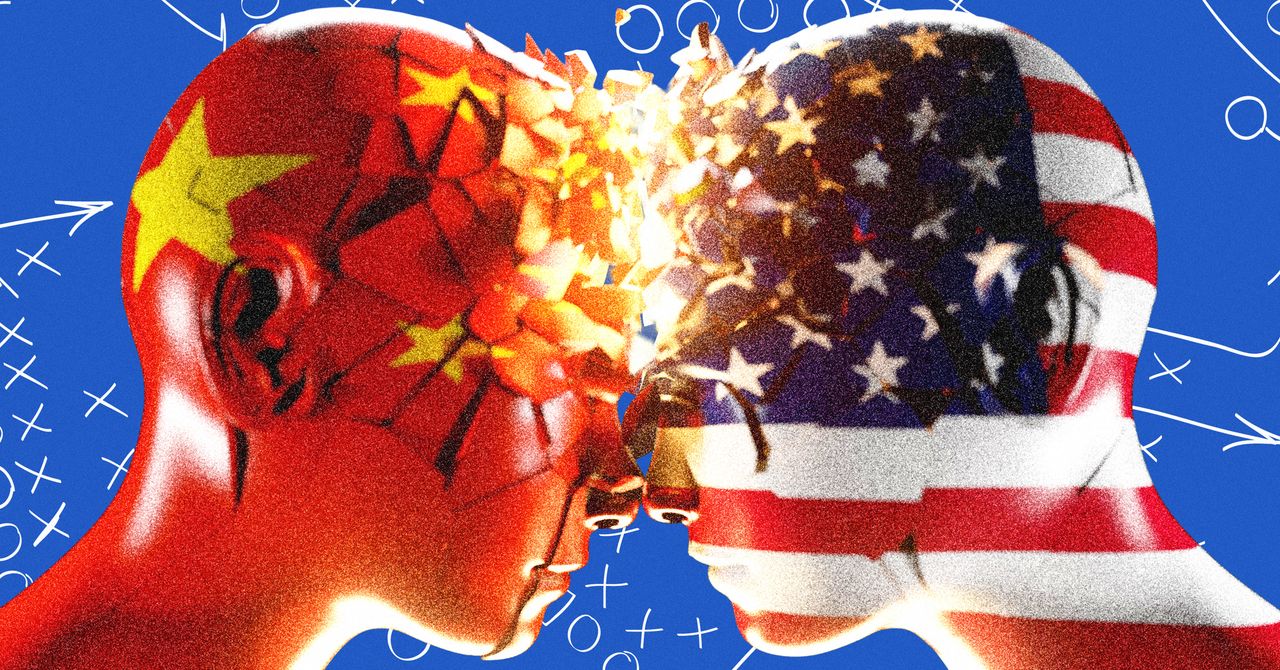
But perhaps the biggest parallel between the current moment and January 2025—when the world was shocked by DeepSeek’s R1 model—is that it reaffirms how American and Chinese AI labs are taking diverging paths when it comes to being open or closed.
When it first burst onto the scene, DeepSeek challenged the premise that only closed-source models built with billions of dollars of investment in compute infrastructure and training could achieve frontier performance. But since then, Western AI labs have continued developing AI the same way, and now American frontier models feel more roped-off than they were a year ago.
Anthropic said for months that its latest Mythos model was so dangerously good at hacking that only approved collaborators could use it. When it was finally released more widely, the White House responded by issuing broad export controls, which forced Anthropic to take Mythos and its less capable sister model, Fable 5, offline temporarily. OpenAI similarly delayed the release of GPT 5.6 after it received a request from the White House.
In China, meanwhile, the situation looks very different. Chinese startups and tech giants have doubled down on open source: Anyone with a good enough computer environment can now download an open-weight model, run it locally, add customizations, and overall enjoy a much greater degree of freedom than OpenAI and Anthropic would ever allow. In many ways, the open versus closed debate is more entangled with the US versus China debate than ever before.
There are a lot of reasons why Chinese labs have chosen a business strategy built atop open-source models. Being the newer, smaller fish in the AI field, making their models free and open can help Chinese firms attract more users, collaborators, and media spotlight. It also puts them in a separate lane of competition from the one that OpenAI, Anthropic, Google, SpaceX, and other deep-pocketed giants are in.
Earlier this year, rumors spread that Alibaba might be considering joining the closed-source race after it rearranged its corporate AI model development teams. But the tech giant announced on Monday that it would again release the latest version of Qwen—its line of open-source models beloved by the global tech community—with open weights, signaling to customers and the public it is not pivoting away yet.