


Fire extinguisher: It’s good to have if you need to fight a small fire, but if your car is on fire, back off and wait for the emergency help. If you buy a fire extinguisher, make sure it is intended for automotive use.
Water and nonperishable food: They’re always good things to carry, particularly on long trips. Think granola and protein bars; bottled water will usually last for six months before it needs to be replaced.
Items for handling a flat tire: Some kits come with an aerosol can of tire sealant that can temporarily fix a tread puncture. Be aware that these products may not work well in extreme cold weather (check the directions), nor are they intended for large punctures or tires with sidewall damage. Always use a spare tire if one is available, or call roadside assistance for a tow.
Combination tool: Many kits also include a combination window punch and seat belt cutter tool. The window punch can help you escape from a car with power windows that no longer work because the battery is dead or the car is submerged.
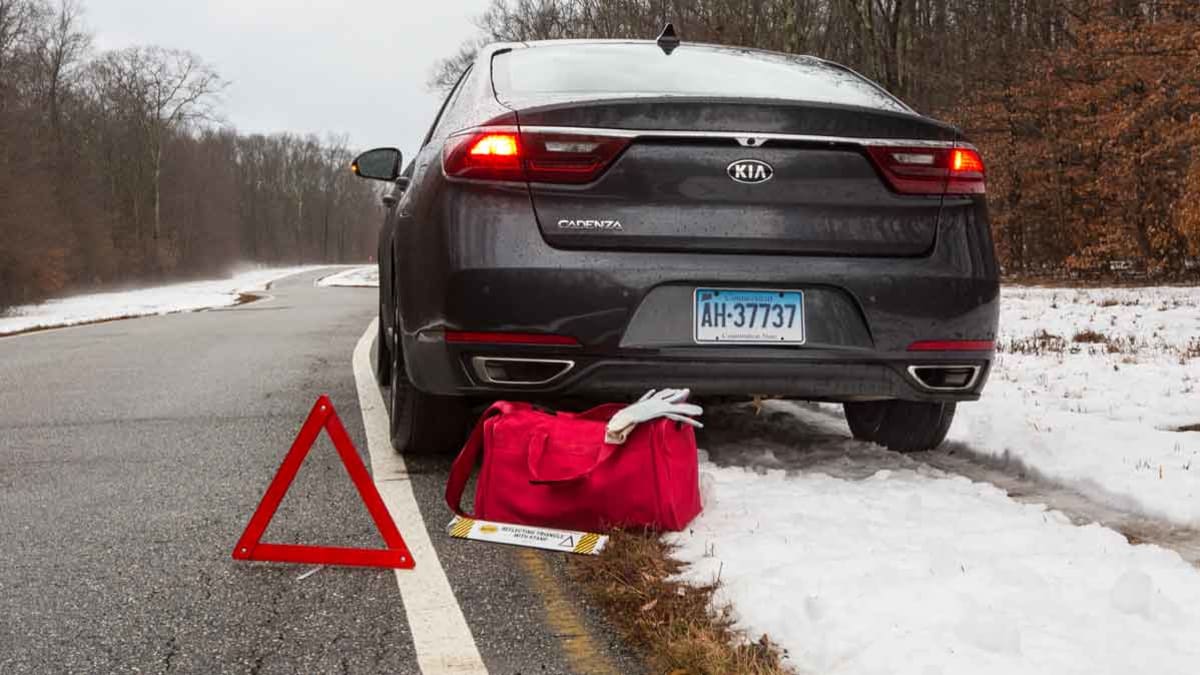
Items to help if you’re stranded: Most kits come with a flashlight, and some include a signaling cone, reflective triangles, or flares to warn oncoming cars of your presence. Pack backup batteries for your flashlight. A headlight and a reflective safety vest are also a good idea, especially if you have to change a flat tire after dark.
Basic first-aid kit: Most emergency kits have one for the bare essentials, such as attending to a small cut. Add things that suit specific health needs, and be aware of how temperature may affect medicines.
Phone charger: A phone charger is a good thing to keep in the car, especially during the winter and on road trips. Better yet, keep a charged portable power supply in your emergency kit. Get a car-specific one with a wide temperature operating range. Some can also jump-start a car and/or include a built-in light.